

You are about to approve a DeFi transaction. The website looks familiar, the wallet address appears correct, and the gas estimate seems ordinary. Yet the action may do something very different from what the button suggests. A “claim” can authorize a token spender. A swap can route through a contract you did not intend to trust. A signature that costs no gas can still grant valuable permissions. This is the practical security problem facing US-based DeFi users: the danger is often not a stolen password, but a transaction whose consequences are difficult to see before signing.
Wallet security has therefore evolved beyond protecting a private key. Key custody remains foundational, but modern protection also depends on interpretation: identifying what a decentralized application is asking your wallet to do, distinguishing a routine interaction from an irreversible one, and recognizing when the displayed result does not match the intended action. Browser wallets with transaction simulation can help close that gap. They do not make DeFi safe by default, but they can turn opaque contract calls into warnings and decision points.
From seed phrases to transaction intent
Early cryptocurrency wallet advice focused on the secret recovery phrase: write it down, keep it offline, and never share it. That advice still matters because anyone who obtains the phrase can generally control the wallet. But DeFi introduced a second layer of risk. Users can keep their recovery phrase private and still lose assets by approving a malicious contract, signing an unexpected message, or interacting with a compromised application.
This shift is easier to understand if wallet security is divided into three questions. First, can an attacker control the wallet’s signing authority? Second, is the application authentic and connected to the intended network? Third, what state change will the proposed transaction cause? A wallet extension primarily helps at the signing boundary, where a user authorizes an operation. It cannot independently prove that every website is honest, but it can provide context that a web page may omit.
That distinction corrects a common misconception: a wallet is not a firewall. It is closer to a signing instrument with a security interface. The blockchain will execute valid instructions whether the user understood them or not. Once a transaction is confirmed, reversing it usually depends on the receiving party’s cooperation, a protocol’s emergency controls, or circumstances outside the user’s control. Good wallet design cannot remove that finality; it can only improve the quality of the decision made before finality.
What transaction simulation actually does
Transaction simulation is a preview process. Before a transaction is broadcast, software attempts to execute the proposed call against a representation of the current blockchain state. The result can reveal expected token transfers, approvals, balance changes, contract failures, or other effects. In plain language, the wallet asks: “If this instruction were processed under the available conditions, what would probably happen?”
That “probably” is important. A simulation is not a prophecy and not a legal guarantee. Blockchain state can change between the preview and confirmation. Prices can move, liquidity can disappear, a contract can depend on timing, or a transaction can behave differently because of ordering by block producers. Some contracts also contain logic that is difficult to model perfectly. Simulation is best understood as an additional observation layer, not as a replacement for judgment.
Still, the mechanism is valuable because the raw transaction format is rarely human-friendly. A smart-contract call may contain function data, token amounts, addresses, and parameters that are meaningful to a machine but hard for a person to inspect. A useful wallet translates that call into a higher-level account of likely effects: which assets may leave, which assets may arrive, whether an approval is being granted, and whether the operation appears consistent with the connected application.
The most useful mental model is not “simulation detects scams.” It is “simulation exposes a mismatch.” If a page says that you are minting a free item but the wallet preview indicates that a valuable token will be transferred, the mismatch is the warning. If a swap preview shows an unexpected asset leaving your wallet, or an approval grants unusually broad spending authority, the user has a reason to pause. Security improves when the wallet helps compare intention with execution.
Installing a browser extension without creating a new risk
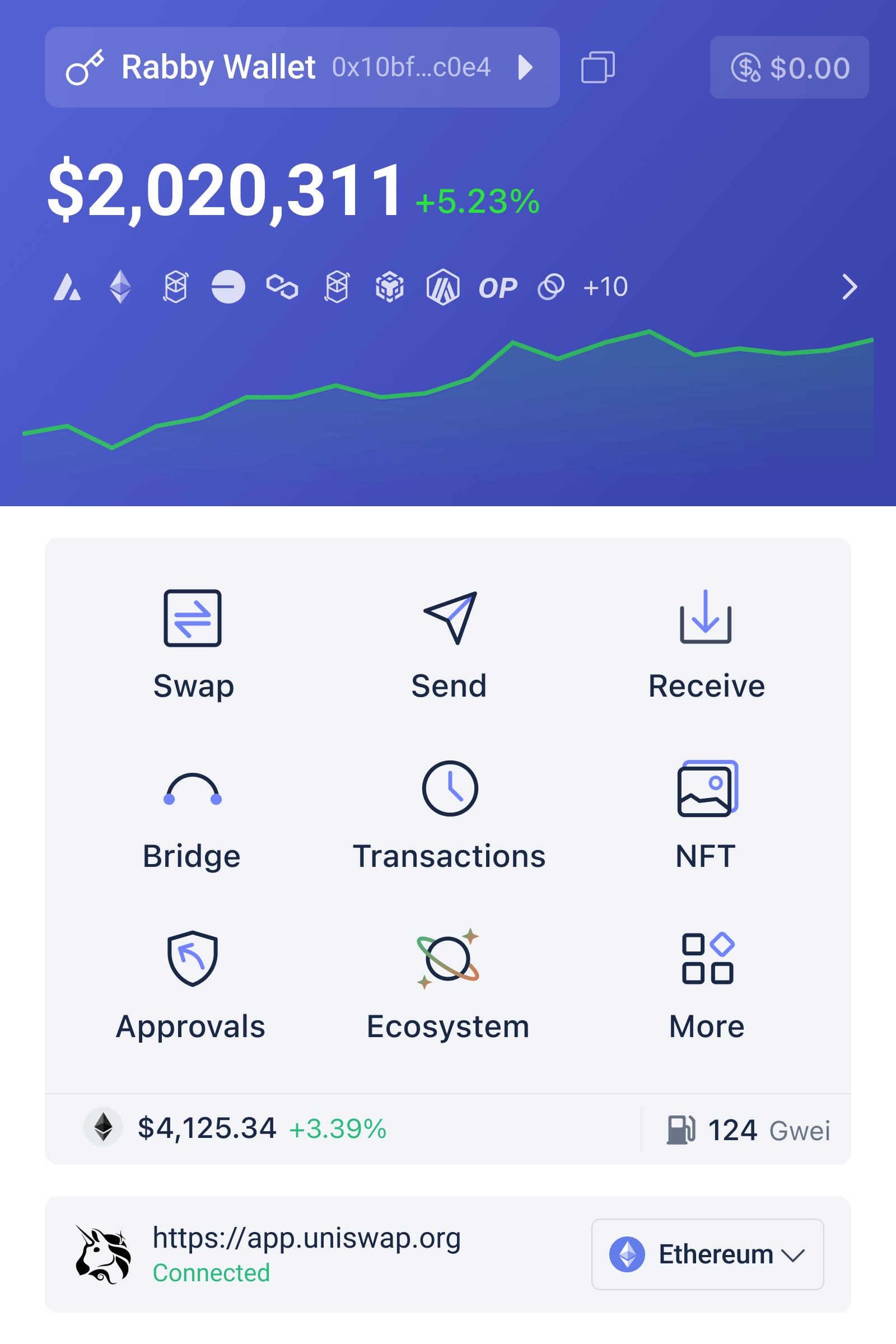
The installation step deserves more attention than it usually receives. A wallet extension is security-sensitive software, so the safest download path is one that begins with a trusted project domain or an official browser extension listing rather than a sponsored search result, unsolicited message, or social-media reply. Users seeking a rabby wallet extension should verify the source, inspect the requested permissions, and confirm that the browser store listing and publisher information are consistent before creating or importing a wallet.
During setup, the recovery phrase should be treated as the master credential, not as a routine password. It should not be entered into a website, shared with support, stored in a cloud note, or photographed for convenience. A hardware wallet can reduce exposure of the signing key, but it does not eliminate the need to inspect transactions: a hardware device can confirm a signature while the user still authorizes the wrong contract interaction.
After installation, a cautious user should separate everyday activity from high-value custody where practical. A testing or low-balance wallet can be useful for unfamiliar applications, while a more protected wallet can hold long-term assets. This is not perfect compartmentalization; users can still connect the wrong account or approve a dangerous contract from the wrong wallet. The point is to limit the blast radius when a mistake occurs.
Approvals, signatures, and the hidden cost of convenience
Many DeFi interactions involve token approvals. An approval allows a contract to spend a specified token on the user’s behalf, often so that a later swap, deposit, or liquidity action can proceed. The convenience is real: users do not need to authorize every individual token movement. The trade-off is that an approval can remain active after the original interaction, depending on the token and the allowance parameters.
This is why a transaction that appears successful can still represent unfinished security work. Disconnecting a wallet from a website does not necessarily revoke permissions already granted on-chain. Nor does closing the browser tab. Users should periodically review allowances and revoke permissions they no longer need, particularly when they have experimented with unfamiliar protocols or no longer trust an application’s operational security.
Signatures create another layer of ambiguity. Some signatures do not directly move funds and therefore do not require a network fee, but they may authorize an off-chain order, permit, login session, or other action that a service can later submit or interpret. “No gas” is not the same as “no risk.” The relevant question is what authority the signature delegates and how long that authority lasts.
Transaction simulation can clarify many of these cases, but its usefulness depends on the quality of the data and the application context. If a contract’s behavior is conditional, the preview may be incomplete. If a malicious site changes its request after the preview, the user must check the final prompt again. If the wallet cannot decode a contract call, an unfamiliar or incomplete display should be treated as a reason to stop, not as evidence that the transaction is harmless.
A practical review framework for every DeFi transaction
A repeatable review process is more reliable than trying to develop an instinct for scams. Before signing, ask four questions: Who is requesting this? What authority am I granting? What assets could leave my wallet? Can I explain the result in ordinary language? If the answer to the last question is no, the transaction is not yet understood well enough to authorize.
Next, compare the website’s stated purpose with the wallet’s simulation. A swap should resemble a swap. A deposit should not unexpectedly include a transfer to an unrelated address. A claim should not require an expansive token allowance without a clear explanation. Pay attention to network selection, contract addresses, recipient addresses, slippage settings, and the difference between a one-time allowance and a potentially unlimited one.
There is also a behavioral rule worth adopting: urgency is a security signal. A countdown timer, a message claiming that funds will be lost unless you sign immediately, or a request to disable wallet protections is not proof of fraud, but it changes the burden of proof. Legitimate protocols can have time-sensitive mechanics, yet urgency reduces the time available for independent checking. When the downside is irreversible, slowing down is not inefficiency; it is risk management.
For larger transactions, use a second channel of verification. Check the protocol’s known domain through a saved bookmark, inspect the contract address through a trusted source, and consider a small test transaction when the mechanics allow it. These steps cannot defeat every sophisticated exploit, especially one involving a legitimate-looking but compromised application. They do, however, reduce the chance that a typo, phishing page, or misunderstood approval becomes a total loss.
Where wallet intelligence stops
Simulation has a meaningful boundary: it estimates execution, not the future health or honesty of a protocol. A preview may correctly show that you will receive a token while saying little about whether that token is liquid, transferable, economically valuable, or subject to restrictive contract rules. It may show an expected swap while failing to capture what happens if market conditions change before inclusion.
There are broader concerns as well. More warnings do not automatically produce better decisions. If every interaction generates dense technical alerts, users may develop warning fatigue and approve prompts mechanically. Security interfaces face a design trade-off between completeness and comprehension. The best warning is not the longest one; it is the one that identifies the consequence most likely to change the user’s decision.
No recent project-specific news is available for the current or latest eligible week, so there is no responsible basis for claiming a newly announced Rabby feature or security change here. The broader direction is nevertheless clear as a conditional trend: wallet interfaces are likely to compete increasingly on explanation, permission visibility, and pre-signing context, not merely on whether they can connect to another application. If simulation becomes more accurate and less confusing, users may begin to treat transaction review as a normal part of DeFi rather than an emergency response to suspicious sites.
FAQ: Rabby extension downloads and transaction safety
Is downloading a wallet extension enough to protect my funds?
No. A legitimate extension can help display transaction effects and flag inconsistencies, but security also depends on the download source, recovery-phrase protection, account separation, application verification, and the decisions made at the signing prompt. The extension reduces some forms of uncertainty; it does not remove phishing, contract, market, or operational risk.
Can transaction simulation guarantee that a DeFi transaction is safe?
No. Simulation previews likely execution under particular assumptions. It may not capture future state changes, every conditional contract path, economic risks, or a protocol’s long-term trustworthiness. Treat a clear simulation as useful evidence, not a guarantee. If the result is unexplained, incomplete, or inconsistent with the action you intended, do not sign.
Should I revoke every token approval after using DeFi?
Not necessarily. Revoking approvals can reduce lingering permissions, but it costs a network transaction and may make repeated use less convenient. A sensible approach is to review allowances periodically, remove permissions for abandoned or untrusted applications, and avoid broad approvals when a narrower option is available. The right balance depends on the value at risk and how often the wallet interacts with the protocol.
The durable lesson is simple but not simplistic: wallet security is the management of authority under uncertainty. Protecting the recovery phrase controls who can sign, while transaction simulation helps the signer understand what that authority may cause. Used together with careful installation, permission review, and a willingness to pause, these practices do not turn DeFi into a risk-free environment. They make the risks more visible—and visibility is often the point at which a preventable mistake becomes a decision you can actually evaluate.