

A common misconception is that choosing a crypto wallet is mainly a question of where the private keys are stored. That matters, but for active DeFi users it is only half the problem. The other half is interpretation: which network is being used, what a smart contract will do, which tokens may leave the wallet, and whether the transaction matches the user’s intention. A wallet can protect a key and still present a dangerous signing request poorly.
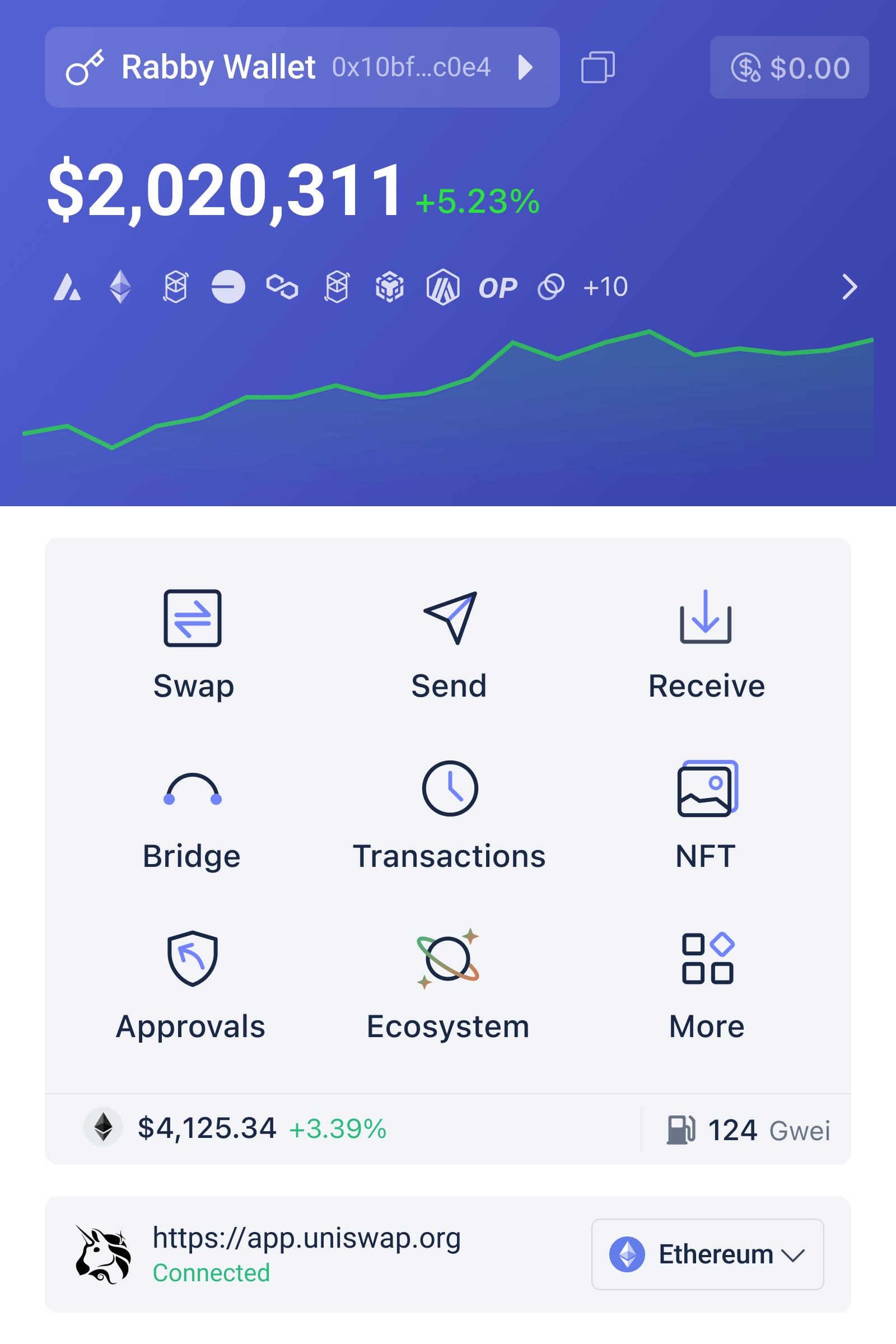
That is the context in which Rabby has developed as a DeFi-focused alternative to more general-purpose wallets. It is a non-custodial wallet associated with DeBank, designed for Ethereum and other EVM-compatible networks, with an emphasis on transaction simulation, security warnings, and multi-chain navigation. For users in Germany and elsewhere in Europe who move between Ethereum, Layer 2 networks, and sidechains, the important question is not simply how to download Rabby. It is how its design changes the decision process before a transaction is signed.
From account storage to transaction interpretation
Early browser wallets largely solved an access problem: they gave users a practical way to connect a blockchain account to a decentralised application, or dApp. As DeFi expanded, that model became strained. One person might use the same address on Ethereum, Arbitrum, Optimism, Polygon, Base, Avalanche, or the BNB Chain, while each network has different contracts, gas conditions, and operational risks. The wallet was no longer just a key container. It had become the user’s control panel for a fragmented financial environment.
Rabby’s central response is transaction simulation. Before signing, the wallet simulates the proposed action and presents expected changes to token balances. Mechanically, this creates an additional inspection layer between a dApp and the user’s private key. Instead of reading an opaque request filled with contract data, the user can examine an intended outcome: which assets may be spent, which assets may arrive, and whether the approval or interaction appears consistent with the chosen action.
This is a meaningful improvement in human-computer interaction, but it is not a guarantee. A simulation reflects the transaction as interpreted under particular conditions. It cannot remove smart-contract risk, oracle risk, bridge risk, market volatility, or the possibility that a user is interacting with a malicious or compromised application. It also cannot rescue a user who approves a warning without understanding it. The sharper mental model is therefore not “simulation makes DeFi safe,” but “simulation makes some risks more visible before commitment.”
Why multi-chain convenience can also increase risk
Rabby supports more than 140 EVM-compatible networks, including widely used environments such as Ethereum, Polygon, Arbitrum, Optimism, Avalanche, Base, and BNB Chain. Its automatic network switching can reduce a familiar source of friction: connecting to a dApp and manually selecting the correct chain. For routine activity, this is useful. Fewer network changes mean fewer opportunities to send an asset to the wrong environment or misunderstand where a transaction is taking place.
Yet convenience has a boundary. Automatic switching reduces interface errors, but it can also make chain context less mentally prominent. A user who moves quickly between networks may see a familiar dApp and assume that the economic conditions are also familiar. They are not. Gas costs, liquidity, contract deployments, bridge routes, finality assumptions, and available protections can differ substantially. Before signing, users should still confirm the network, the contract address, the asset, and the expected result.
This is especially important for bridges. Rabby can integrate bridge routes such as LI.FI, allowing users to move assets across chains from within the wallet interface. The benefit is a simpler workflow: the user does not need to discover every bridge separately. The trade-off is that a cross-chain action is not merely a transfer. It may involve a source-chain transaction, a bridge or routing protocol, a destination-chain delivery process, and external liquidity or messaging assumptions. A clean interface can compress these steps visually without eliminating their underlying dependencies.
Swaps, gas accounts, and the economics of convenience
The integrated swap function scans decentralised exchange venues such as Uniswap and 1inch to seek competitive rates and lower slippage. Slippage is the difference between the expected exchange rate and the rate actually obtained, often caused by price movement or insufficient liquidity. An aggregator can compare routes more efficiently than a user checking each venue manually. However, the best quoted rate is not necessarily the cheapest overall execution: network fees, route complexity, approval transactions, and price impact still matter.
The Gas Account feature addresses another practical obstacle. Users may be able to pay transaction fees with stablecoins such as USDC across supported networks even when they do not hold the native token required by the chain. This can make a wallet easier to use for newcomers and reduce the need to maintain small balances of several different tokens. It also changes the operational habit of managing gas. The user still needs to understand the service conditions, supported networks, and whether the stablecoin balance is available in the right context. Removing one friction point does not remove the need for transaction awareness.
Rabby Points, earned through activities such as swaps, gas top-ups, or referrals, add a loyalty layer. That may encourage engagement, but it introduces a familiar behavioural question: are users performing an action because it is economically sensible or because the interface rewards activity? Points should be treated as an optional incentive, not as evidence that a swap, bridge, or top-up is advantageous.
Security architecture: useful barriers, not absolute protection
Rabby includes a security engine that checks contracts and addresses for signals associated with phishing, known exploits, and unlimited token approvals. An unlimited approval allows a contract to spend a token balance within the scope granted by the user, which can be convenient but increases exposure if the contract is later compromised or was unsafe from the beginning. Highlighting this risk before confirmation is valuable because approval transactions are easy to overlook.
The wallet’s non-custodial model means private keys are stored locally on the user’s device rather than transmitted to Rabby’s servers. Its software is open source and released under the MIT licence, which allows community inspection of the code. Rabby also supports hardware wallets such as Ledger, Trezor, and OneKey. These features address different layers of security: local key custody, code transparency, and separate signing hardware.
None of these layers should be confused with a universal security certificate. A hardware wallet can still sign a malicious transaction if the user confirms it. Open-source availability does not mean every user has audited the code, and a warning engine depends on the quality and timeliness of its detection systems. The strongest practical setup is layered: obtain the wallet from a trusted source, verify the intended dApp, use hardware signing for meaningful balances, inspect simulated effects, limit approvals where appropriate, and test unfamiliar operations with a small amount.
Rabby’s independence from its backend is also conceptually important. The wallet does not itself rewrite or originate the user’s transactions; it acts as an interface and checking layer, while core signing remains possible even if Rabby services are unavailable. That separation reduces dependence on a single online service, although the underlying blockchain, dApp, RPC provider, bridge, and market infrastructure may still have their own availability constraints.
What German DeFi users should examine before downloading
For a user deciding whether to rabby download, the sensible evaluation is task-based rather than brand-based. Browser-extension support for Chrome, Brave, and Edge suits desktop DeFi workflows, while desktop applications for Windows and macOS and mobile applications for iOS and Android broaden access. The relevant choice depends on where the user interacts with dApps, how keys are backed up, and whether a hardware wallet will be connected.
A useful checklist begins with provenance: install only from an official distribution channel and verify that the extension or application is the intended one. Next, separate assets by purpose. A wallet used for experimental DeFi should not automatically contain the same balance as a long-term reserve. Then examine the transaction itself rather than relying on the application’s name. Ask what is being approved, which chain is active, what the simulation predicts, and whether the result makes economic sense after gas and slippage.
The most non-obvious lesson is that wallet quality is partly a question of cognitive design. A wallet does not merely store authority; it frames the moment in which authority is exercised. Rabby’s strongest contribution is therefore not that it removes every danger, but that it attempts to expose more of the transaction’s meaning before the irreversible step. That is particularly relevant as DeFi becomes more modular and cross-chain activity hides more dependencies behind a single button.
What to watch next
The recent positioning of Rabby in the Chrome Web Store continues to emphasise an open-source wallet for Ethereum and EVM networks, with a smooth multi-chain experience and protection for DeFi users. The near-term implication is conditional: if users increasingly manage positions across several EVM environments, features such as simulation, automated network selection, integrated routing, and stablecoin-based gas payment may become expected rather than distinctive.
Whether that improves safety will depend on user behaviour and on the quality of the information displayed. More automation can reduce routine mistakes, but it can also encourage faster confirmation. The important signal to monitor is not simply how many chains a wallet supports, but whether it helps users understand cross-chain consequences, approval scope, route risk, and the difference between a simulated outcome and a guaranteed one.
FAQ
Is Rabby a custodial wallet?
No. Rabby is designed as a non-custodial wallet. Private keys are stored locally on the user’s device and are not sent to Rabby’s servers. The user remains responsible for the seed phrase, device security, backups, and every transaction that is signed.
Does transaction simulation make Rabby risk-free?
No. Simulation can clarify expected balance changes and expose some suspicious behaviour, but it cannot eliminate smart-contract vulnerabilities, bridge failures, phishing, market loss, or incorrect user decisions. Treat it as an inspection tool and combine it with address verification, cautious approvals, and hardware signing for substantial funds.
Can Rabby pay gas without the native token?
Its Gas Account feature can allow supported transaction fees to be paid with stablecoins such as USDC, including across networks. Availability and conditions can depend on the relevant chain and service, so users should check the displayed details before confirming.